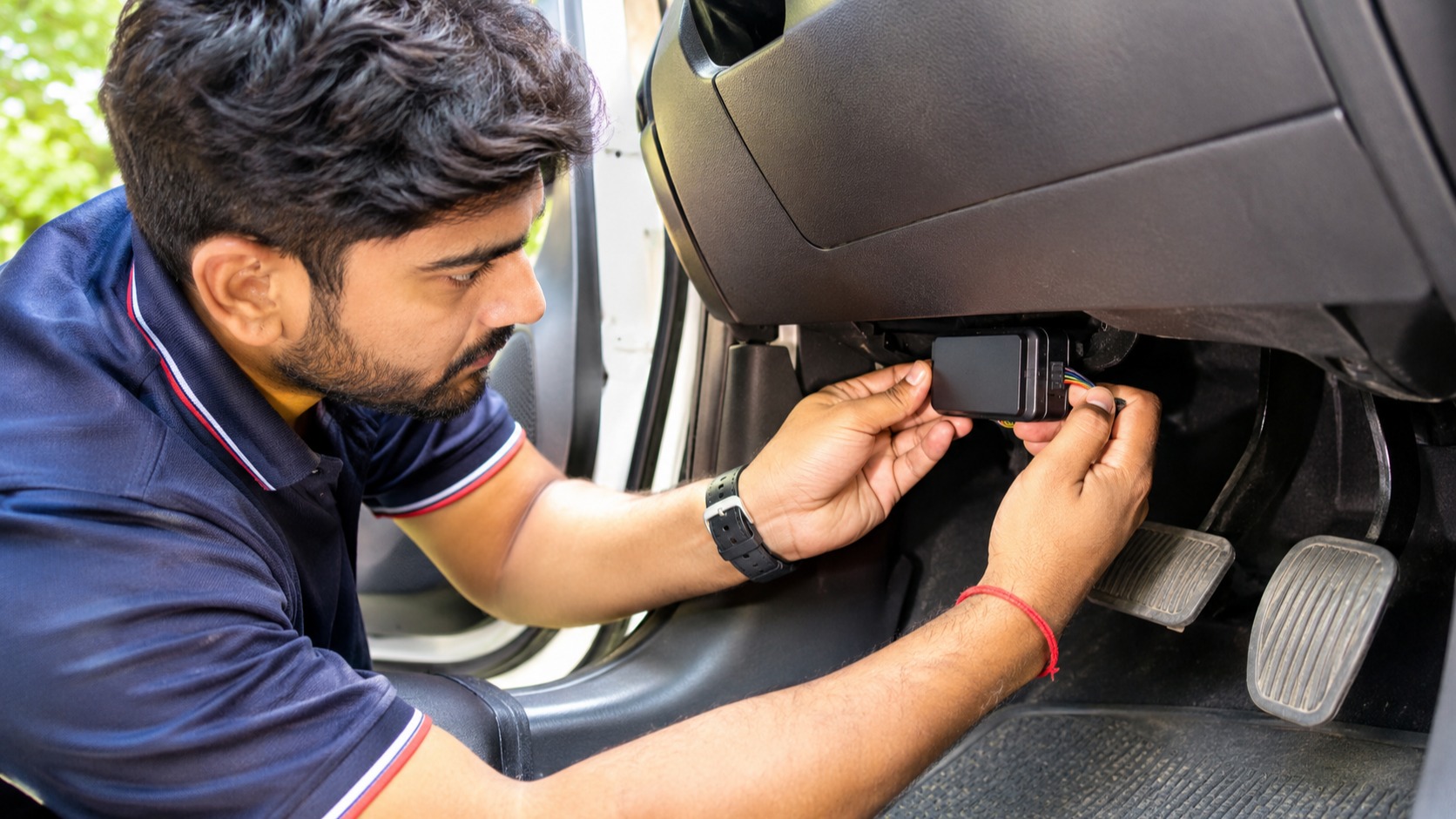

If you run a taxi, bus, school van or permit-based commercial vehicle in India, you have probably heard of AIS 140. It is a standard for vehicle tracking devices that is often confused with an ordinary GPS tracker. This guide explains what it is, who needs it and how to choose a device the right way.
What is AIS 140?
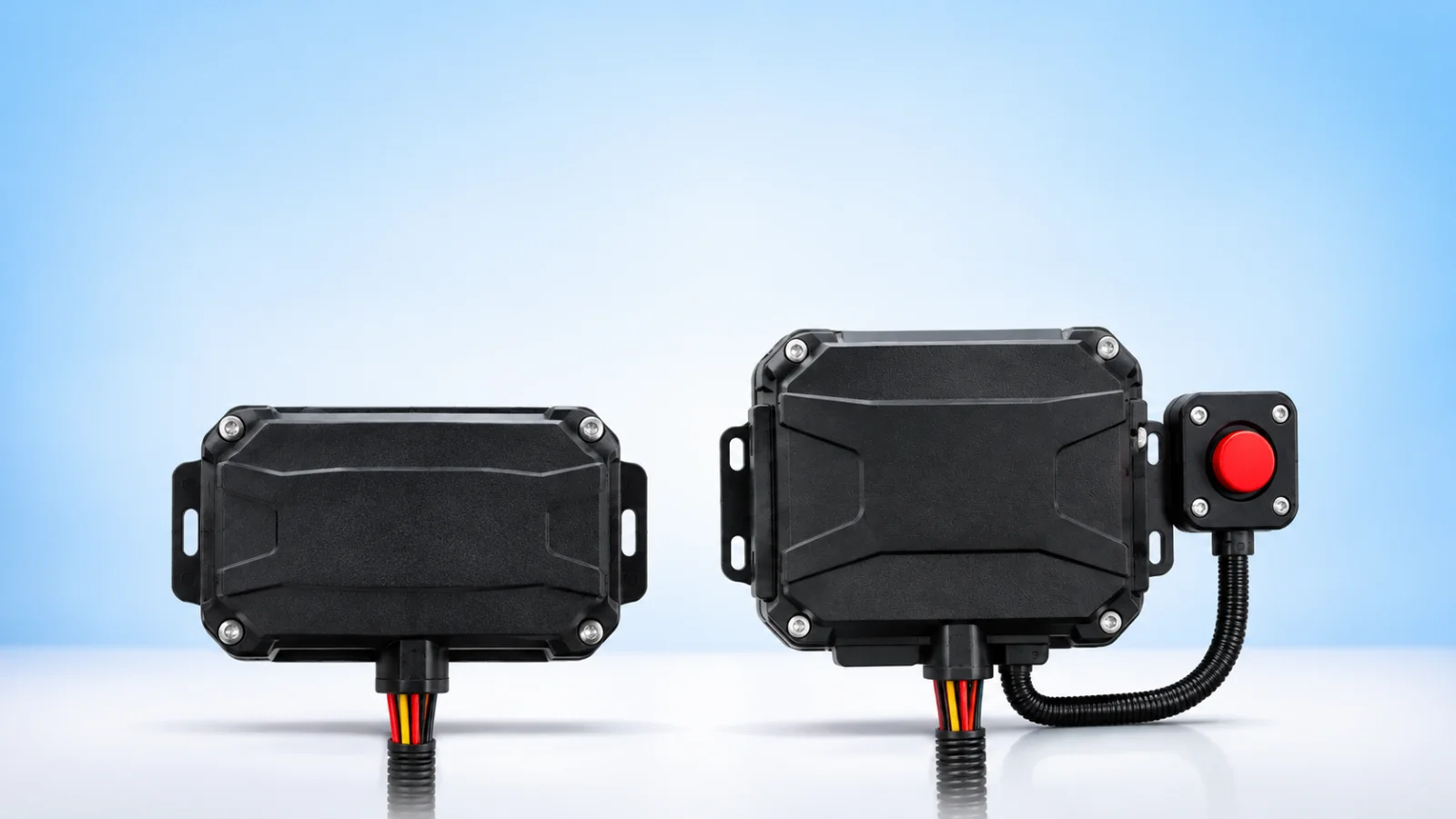
AIS 140 stands for Automotive Industry Standard 140. It is published by ARAI (Automotive Research Association of India) and sets the technical requirements for a Vehicle Location Tracking Device (VLTD) with an emergency button. Devices are tested and certified against this standard by authorised testing agencies.
The legal basis is Rule 125H of the Central Motor Vehicles Rules, 1989. It requires public service vehicles to carry a vehicle location tracking device and one or more emergency buttons. The main aim is passenger safety, especially for women and children. If someone presses the panic button, an alert goes out along with the vehicle's location.
Does your vehicle need AIS 140?
The central rule applies to public service vehicles, which broadly means vehicles that carry passengers for hire. It does not apply to the following:
• Two-wheelers
• E-rickshaws
• Three-wheelers
• Transport vehicles for which no permit is required
Vehicles that are usually covered
Buses, taxis and cabs with a commercial permit, and other four-wheeled or larger passenger vehicles generally fall under the rule. The central order made the device mandatory for new public service vehicles registered on or after 1 January 2019. For older vehicles, each state set its own phased deadlines.
Some states also extend tracking requirements to other categories, such as national-permit goods vehicles or school transport. Rules differ from state to state, so do not assume that what applies in one state applies in another.
Vehicles that are usually not covered
Private cars and bikes are not covered by Rule 125H. Owners can still fit a GPS tracker voluntarily for theft protection and live tracking, but it is not a legal requirement under this rule.
Key tip: Rules and deadlines change. Before you buy any device, confirm the current requirement for your vehicle type with your state transport department or RTO.
Enforcement is tightening
Several states have recently moved to enforce the rule. Tamil Nadu has made AIS-140 devices mandatory for public service vehicles, Mizoram issued a circular in June 2026, and Uttar Pradesh announced mandatory tracking and panic buttons for public transport in December 2025. If you operate a permit-based vehicle, it is wise to check your status before your next permit or fitness renewal.
Why a normal GPS tracker is not enough
An ordinary GPS tracker is designed to show the owner where a vehicle is. An AIS 140 device is built and tested to meet a regulatory standard. A tracker can work very well for fleet monitoring and still not meet the rule.
Feature | Normal GPS tracker | AIS 140 device |
|---|---|---|
Main purpose | Tracking for the owner | Passenger safety and regulatory compliance |
Certification | Not required | Tested and certified to AIS 140 by an authorised agency |
Emergency button | Usually not included | Required |
Satellite support | GPS | GPS along with NavIC (IRNSS) |
Accepted for compliance | No | Yes, if the exact model is approved |
Good accuracy, a long battery backup or an attractive mobile app do not replace certification. An existing tracker cannot normally be converted into an AIS 140 device, because the approval applies to the specific tested model. If your vehicle is covered, you will usually need to fit an approved device.
How to choose an AIS 140 device
Not every device sold as "AIS 140" is the right one for you. Use this checklist before you pay.
1. Ask for the type-approval certificate. The model should be tested and approved under AIS 140. Do not rely on verbal assurances.
2. Check the official list. ARAI publishes and updates a list of approved models. Confirm that the exact model number appears on it.
3. Confirm the panic button. A device without an emergency button does not meet the rule for public service vehicles.
4. Ask who handles activation. Devices must be registered and activated as per the transport department's process. Ask who will do this and how long it takes.
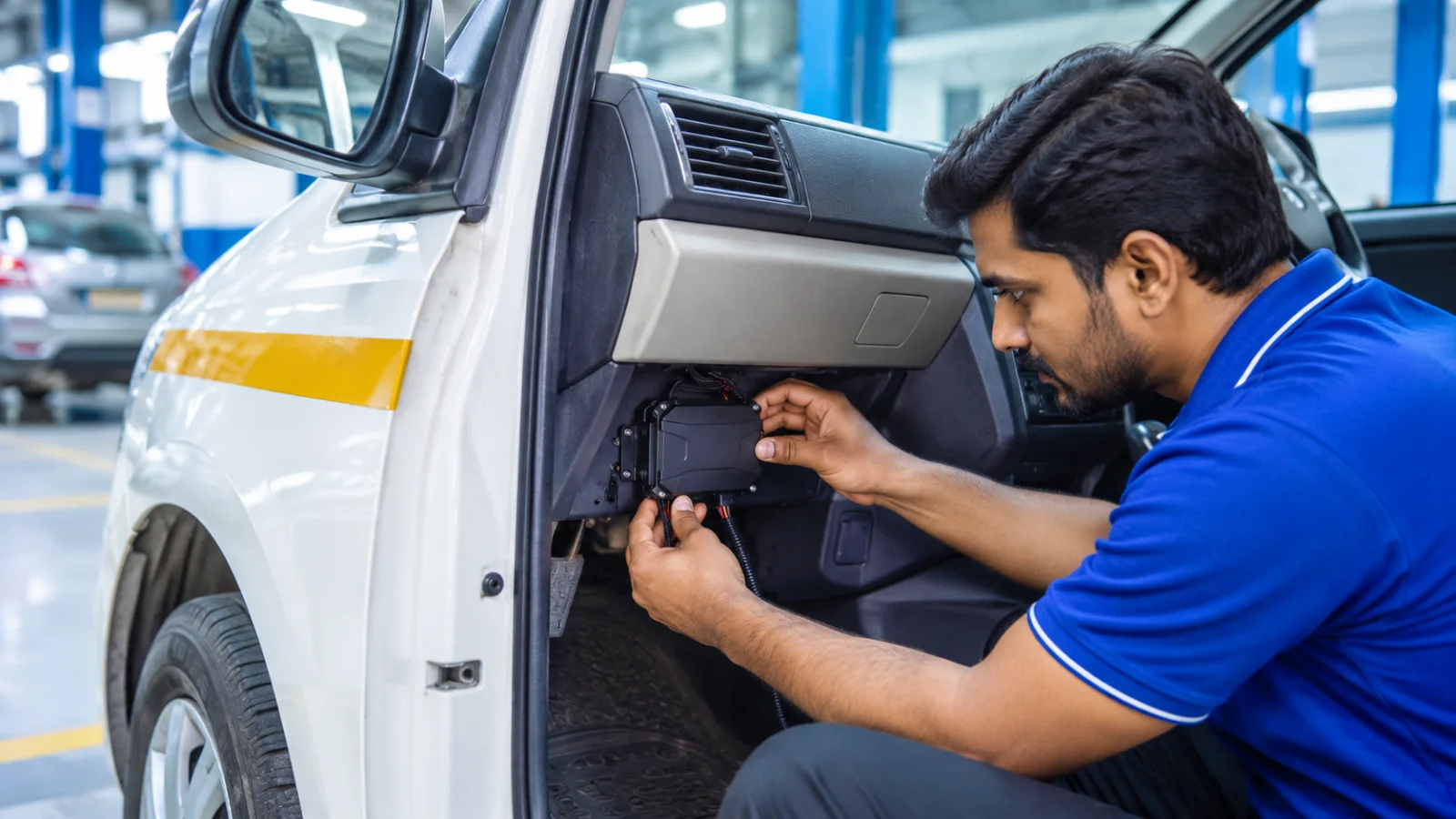
5. Check the installation method. Choose trained technicians who install the device cleanly and avoid damaging the vehicle's wiring.
6. Ask for the full cost. Get the device price, installation cost and any network or renewal charges in writing.
7. Insist on a new device. Do not accept used or refurbished units.
Benefits beyond compliance
Meeting the rule is the main reason to fit an AIS 140 device, but it can also help you run your operation better. When the device is paired with fleet software, you can use the same data for day-to-day management. Our software solutions show how tracking data can become useful reports.
• Live location: See where your vehicles are, without calling the driver.
• Route and speed alerts: Get notified about deviations and over-speeding.
• Reports: Review trips, stops and usage in scheduled reports.
• Passenger confidence: For school and passenger transport, tracking and a panic button support a stronger safety story.
Results depend on the vehicle, network coverage and how the system is used, so treat these as tools that support good management rather than guarantees. You can also see the industries we serve to understand how different fleets use tracking.
Next steps
If your vehicle is a public service vehicle, start by checking your state's current requirement and the status of your permit and fitness renewals. Then review the checklist above before choosing a device.
GPS Clinic offers AIS140 trackers, including devices with a panic button, and RTO certificates via VAHAN Shakti. Browse our GPS hardware, read the FAQs, or get a free quote.
You can also call us on 9260202020 or visit www.gpsclinic.co.in.